
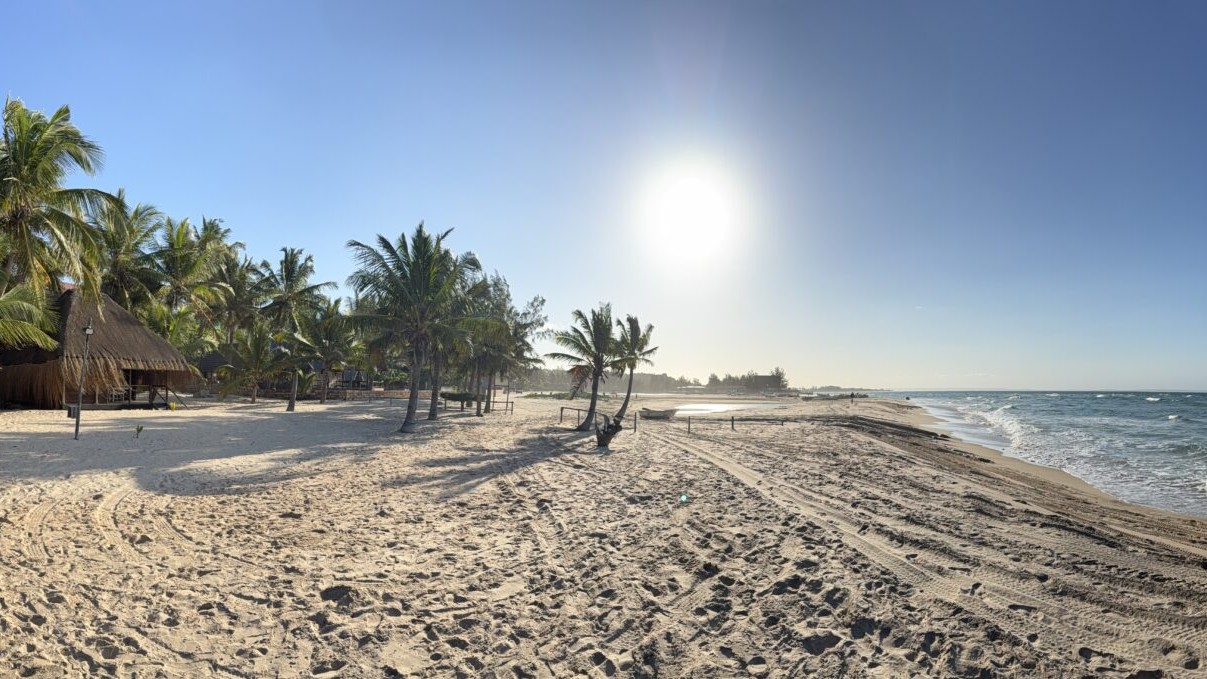
The boutique eco resort model in emerging markets is one of the most compelling hospitality investment opportunities of the current decade. Low entry costs, high differentiation potential, strong international demand and almost no quality supply in key locations. The structural conditions are as good as they get. Duna Serena Boutique Tofo, located on the Indian Ocean coast of Mozambique, is a working example of what this model looks like when it is executed correctly. This article examines what hospitality investors can learn from it.
Why Emerging Markets Are the Next Frontier for Boutique Hospitality
The classic boutique hospitality markets are saturating. Bali, Thailand, Marrakech and the Portuguese coast have all reached a point where differentiation is expensive and occupancy is competed for aggressively. The supply of quality boutique properties in these markets has caught up with, and in some cases exceeded, demand.
Emerging markets present the inverse situation. Demand is growing from a base of international travelers who have exhausted the classic circuit and are actively seeking new destinations. Supply of quality accommodation remains thin, particularly in the segment between budget backpacker and large luxury resort. The gap between what discerning travelers want and what is available creates the precise conditions where a well-positioned boutique property can operate with pricing power and strong occupancy simultaneously. Upstyle Travel’s approach to investment partnerships with eco resort founders is built on exactly this structural observation.
Africa is particularly interesting in this context. The continent has a number of destinations with genuine world-class attractions, functioning tourism infrastructure and a growing international visitor base. The hospitality investment, however, has largely flowed into large safari lodges at the premium end or budget guesthouses at the lower end. The boutique middle is systematically underdeveloped.
The Tofo Beach Market: Underserved and High-Potential
Tofo Beach in Inhambane Province, southern Mozambique, illustrates the opportunity clearly.
The destination has genuine world-class credentials. The Marine Megafauna Foundation has conducted research here since 2005 and documented one of the highest concentrations of whale shark sightings per square kilometre in Africa. Manta rays are present year-round. Humpback whales migrate through from July to November. The dive community has known about Tofo for thirty years. The marine wildlife alone would justify a premium destination positioning.
The market context is equally strong. Southern Mozambique is politically stable, within easy self-drive distance of South Africa’s major population centres, and operates on a currency environment where South African Rand is widely accepted. The primary inbound market, South African self-drive travelers with 4×4 vehicles, has high disposable income, multi-night stays and strong repeat visit rates.
The supply problem is structural. Tofo has backpacker options at $15 to $40 per night and one established luxury resort at $200 to $300 per night. Between those price points, the market is almost empty. A boutique property at $70 to $110 per night with genuine quality and differentiated experience faces almost no direct competition.
This is not an undiscovered market. It is a market where the hospitality investment has not kept pace with visitor demand.
The Duna Serena Model: What Works and Why
Duna Serena Boutique Tofo entered this market with a specific set of decisions that are worth examining as an investment case.
Positioning in the gap. At a base rate of approximately $72 per night (4,600 MZN), the property sits precisely in the under-served segment. The pricing is accessible enough to attract the volume of South African and European travelers who would not pay luxury resort rates in Mozambique, but premium enough to attract guests who expect quality infrastructure and service.
The tiny house format. Tiny houses solve several emerging market problems simultaneously. Construction costs are significantly lower than conventional hotel rooms. The format is inherently private, which is a genuine differentiator in a market where most accommodation is either dormitory-style or open lodge design. The visual distinctiveness creates organic social media content. And the model is modular: additional units can be added incrementally without the capital commitment of a full hotel build-out.
Owner on-site. In emerging market hospitality, the presence of an engaged owner or operator on the property is not a small detail. It directly affects quality consistency, security perception and guest trust. For international travelers who may be visiting Mozambique for the first time, knowing that an experienced local operator is physically present reduces the anxiety that makes some travelers choose safer, more familiar destinations instead.
Infrastructure solved, not avoided. Tofo’s historical weakness as a destination was connectivity. Unreliable power and slow internet were genuine barriers for a segment of international travelers, particularly digital nomads and content creators who need reliable connectivity to work remotely. Duna Serena’s Starlink installation addressed this directly. The result is a property that can credibly market to remote workers seeking extended stays, a market segment with above-average length of stay and willingness to pay.
The braai deck as cultural connector. The outdoor braai area is more than an amenity. For South African travelers, the braai is a cultural ritual. A property that provides the right infrastructure for this experience is communicating directly in the primary market’s cultural language. The cost of the infrastructure is minimal. The conversion impact for the target demographic is significant.
4×4 parking as a solved problem. Self-drive travelers from South Africa arrive with fully loaded vehicles, often carrying significant camping and diving equipment. Secure, shaded parking is not a luxury for this group. It is a baseline requirement. Properties that provide it have a clear advantage. Properties that do not lose bookings to those that do.
The Digital Marketing Playbook: Building Authority in a Niche Market
One of the more instructive aspects of the Duna Serena case is the digital marketing approach.
Rather than relying on OTA commissions from Booking.com and Airbnb, the property invested in building organic search authority through a content cluster strategy. A series of long-form articles covering whale sharks in Tofo, the complete Tofo Beach travel guide, safety considerations, self-drive logistics and marine wildlife seasons created a web of interconnected content that Google treats as topical authority.
The results within three months of implementation: over 4,800 search impressions across 130 countries, 114 keywords indexed, and organic traffic from markets including the United Kingdom, United States, Netherlands, Germany and South Africa. The property now ranks for specific searches related to its core marine wildlife offering and appears in AI search overviews for Tofo-related queries.
For a boutique property in an emerging market, this approach has a structural advantage over paid advertising. The traffic is compounding rather than transactional. Each article continues to generate impressions and bookings without ongoing media spend. And the content cluster positions the property as the authoritative local source on its destination, which is a form of competitive moat that OTA-dependent competitors cannot easily replicate.
The lesson for hospitality investors is direct: in emerging market niches, the property that owns the digital narrative about its destination has a sustainable advantage that is worth investing in from day one.
Key Risk Factors in Emerging Market Boutique Hospitality
A balanced investment analysis requires acknowledging the structural risks.
Infrastructure dependency. Emerging markets often have unreliable power, water and connectivity. A boutique property that does not solve these problems independently becomes dependent on local utility consistency, which is typically not guaranteed. The Starlink example is instructive: a $100 to $150 monthly infrastructure cost solved a problem that was previously a significant guest satisfaction risk.
Currency volatility. The Mozambican Metical is subject to inflation and exchange rate pressure. For founders navigating this alongside fundraising, the dynamics of securing funding for tourism businesses in emerging markets add another layer of complexity that investors need to price into their thesis. A property that prices in local currency without a USD or ZAR peg exposes its revenue to currency risk. Pricing in USD or ZAR for international guests, with MZN rates for local transactions, is the standard risk management approach in this market.
Political and security differentiation. Mozambique presents a clear example of within-country geographic risk differentiation. The northern province of Cabo Delgado has experienced significant security disruption. Inhambane Province in the south, where Tofo is located, has remained stable and has seen continued tourism growth throughout this period. Investors in African markets need to perform destination-level due diligence, not country-level analysis alone.
Seasonality management. The core whale shark season runs from approximately October through March. Without active low-season programming, a marine wildlife destination faces significant occupancy pressure for five to six months annually. The digital nomad and remote work positioning is a deliberate counter to this: longer-stay guests with flexible schedules provide occupancy in periods when short-stay tourism visitors are absent.
Scaling limitations. The tiny house boutique model has natural scaling constraints. Adding units improves revenue but at some point shifts the property’s character from boutique to small hotel, with associated management complexity. The better scaling strategy in this market is replication: a second property in an adjacent underserved destination rather than indefinite expansion of the original.
What Hospitality Investors Should Look for in an Emerging Market Boutique Resort
The Tofo case suggests a practical evaluation framework for boutique eco resort investments in emerging markets.
A clear gap in the accommodation spectrum is necessary but not sufficient. The gap must be accompanied by a primary market that has the income, mobility and motivation to fill it. Tofo has South African self-drive travelers. Without that specific inbound market, the gap would not generate the bookings to justify the investment.
Infrastructure problems must be solvable at reasonable cost. Properties where the infrastructure problems are structural or prohibitively expensive to solve are not boutique investment opportunities. They are land banking exercises waiting for government infrastructure investment that may or may not materialise.
The owner-operator advantage is particularly valuable in emerging markets. Institutional management of boutique emerging market properties consistently underperforms compared to engaged owner-operators who live with the consequences of their operational decisions daily. This is a market where management quality is a direct competitive advantage.
Digital authority as a moat. In niche destinations, the property that builds comprehensive online content about the destination before competitors do acquires a compounding traffic advantage. This is an investment that returns more over time, not less.
The Investment Perspective
Tofo Beach represents a destination where the marine wildlife attractions are genuine and documented, the primary inbound market is established and high-value, quality accommodation supply is structurally thin and land and construction costs remain at pre-development-wave pricing.
The window before a destination reaches the point where supply catches up with demand is typically five to ten years. Destinations with genuine world-class attractions and strong primary inbound markets do not remain underserved indefinitely. The question for investors is whether to enter before or after that curve inflects.
Duna Serena Boutique Tofo is a proof of concept, not a finished investment thesis. But as a demonstration that the model works in this specific market, with this specific guest profile and at this specific price point, it provides more useful signal than a hypothetical analysis.
Upstyle Travel evaluates boutique hospitality investment opportunities across Africa and emerging markets. If you are developing a project in this space, contact us to explore potential partnerships. For founders earlier in the process, our guide on how tourism founders find the right investors covers the practical steps in detail.
Frequently Asked Questions
What makes boutique eco resorts in emerging markets attractive for hospitality investors?
The combination of low entry costs, structural supply gaps and growing international demand creates conditions where a well-positioned boutique property can achieve pricing power and occupancy simultaneously. In established markets, this combination is rare. In selected emerging markets, it is still accessible.
What are the main risks of hospitality investment in Mozambique?
Infrastructure dependency, currency volatility and geographic risk differentiation within the country are the primary considerations. Southern Mozambique, including Inhambane Province and Tofo, has remained politically stable and seen consistent tourism growth. Northern Mozambique presents a different risk profile entirely. Country-level analysis is insufficient. Destination-level due diligence is required.
How does Duna Serena Boutique Tofo differentiate itself in the Tofo market?
The property occupies the under-served segment between backpacker and luxury accommodation, with Starlink connectivity, secure 4×4 parking, an owner-managed operation and a tiny house format that delivers privacy and design quality at a price point that attracts the South African and European traveler segment.
What is the typical investment size for a boutique eco resort in southern Africa?
Entry-level boutique eco resort development in southern African emerging markets ranges from approximately $150,000 to $500,000 USD for a four to eight unit property, depending on land costs, build specification and infrastructure requirements. This range is significantly below equivalent investment thresholds in established markets, which is part of the structural attraction.
About Upstyle Travel
Upstyle Travel is the hospitality investment arm of Upstyle Consulting GmbH, based in Vienna, Austria. Led by Dr. Conrad Pramböck, we invest in and partner with boutique hospitality founders and tourism entrepreneurs in emerging markets worldwide.
We are industry insiders with two decades of operational hospitality experience across Europe, Africa and the Asia-Pacific region. We understand the specific challenges of building quality accommodation in markets where infrastructure, distribution and local knowledge are competitive advantages, not given conditions.
Our investment and advisory focus includes boutique and eco-lodge hospitality in underserved destinations, emerging market tourism infrastructure and sustainable travel concepts with strong unit economics.
If you are developing a boutique hospitality project in an emerging market and are looking for a strategic partner with capital and operational expertise, contact us to discuss whether we are a fit.
Contact Information:
Upstyle Travel
Wipplingerstrasse 13/9
1010 Vienna, Austria
Dr. Conrad Pramböck
Tel: +43 676 534 12 57
Email: cp@upstyle-consulting.com
WhatsApp: Start Conversation