
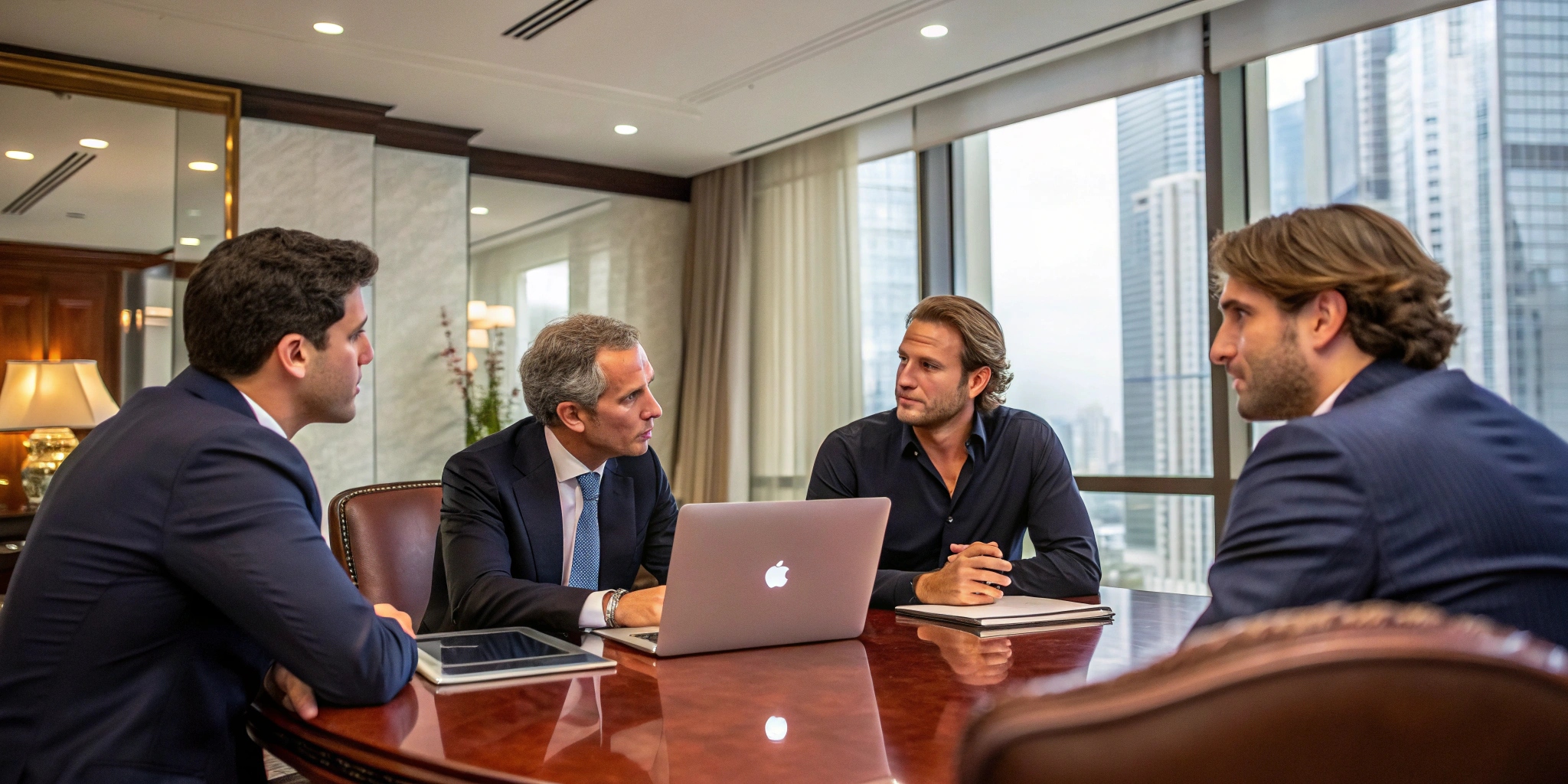
Why the best tourism projects are built by founders who keep their soul—and investors who protect it.
You’ve probably heard the horror stories: The founder who brought the vision, secured the land, and did the hard work—only to be diluted into irrelevance by the third funding round. The investor who smiled during negotiations, then slowly squeezed the founder out once the property was operational. The partnership that started with handshakes and ended with lawyers.
Maybe you’ve even experienced a version of this yourself. Or watched it happen to someone whose project you admired.
So when someone like us says “let’s partner on your tourism project,” your first instinct isn’t excitement—it’s caution. Maybe even fear.
What if they take control? What if I become an employee in my own vision? What if the thing I’m building—the authentic experience, the community relationships, the soul of the place—gets sacrificed for efficiency or profit maximization?
These aren’t irrational fears. They’re based on real patterns in how investment often works. But here’s what you need to understand: those patterns exist because most investors don’t actually understand hospitality. They understand spreadsheets. They understand exits. They understand control.
We understand something different: that the best tourism assets can’t be controlled into existence. They have to be partnered into reality.
Ready to Explore Partnership Without the Fear?
Let’s have an honest conversation about your project, your concerns, and how we actually structure partnerships that work for founders.
WhatsApp Us Now | Send a Quick Email
The Founder’s Dilemma: Small Forever or Soulless Scale?
Most founders we meet are stuck between two bad options.
Option One: Stay Small
You bootstrap everything. You build slowly, unit by unit, as cash allows. Maybe you open with three bungalows instead of ten. Maybe you can’t afford the booking infrastructure that would actually fill those bungalows consistently. Maybe you’re doing your own maintenance, guest communication, and accounting—because you can’t yet afford to delegate.
This can work. Some properties stay deliberately small and thrive. But for many founders, this path means their vision never fully materializes. The yoga platform you imagined doesn’t get built. The restaurant concept stays in your notebook. The expansion to the second ridge never happens.
You maintain 100% control of something that’s 30% of what it could be.
Option Two: Wrong-Fit Capital
You find an investor. Maybe it’s a traditional hospitality group that wants to standardize your concept. Maybe it’s a financial player who sees your project as one line in a portfolio. Maybe it’s a well-meaning family office that simply doesn’t understand tourism operations.
They provide capital, yes. But they also provide “expertise” that feels more like interference. They want you to cut costs in ways that undermine guest experience. They push for scale before you’ve perfected the original. They measure success by metrics that have nothing to do with why guests actually choose your property.
Slowly—or sometimes quickly—you realize you’ve traded ownership for a salary. The project succeeds financially but fails spiritually. Guests sense something is off. Your best staff leave. You start dreaming about your next project, the one where you’ll do it differently.
The Third Option: Actual Partnership
This is what we’re offering. Not a loan with predatory terms. Not an acquisition disguised as collaboration. Not a “partnership” where one partner has all the power.
We’re talking about building something together where both parties have skin in the game, where incentives genuinely align, and where your role as the operational soul of the project is protected—not as a courtesy, but as a strategic necessity.
Our Philosophy: The Enabler Approach
We Don’t Want Employees. We Want Partners.
Here’s a truth that might surprise you: we’re not interested in running your property. We’re not interested in making your operational decisions. We’re not interested in becoming you.
Why? Because we can’t. Not effectively.
You know things we don’t. You understand your local context—the seasonal rhythms, the community dynamics, the supplier relationships, the subtle cultural factors that make or break guest experience. You have the vision that drew us to your project in the first place.
If we try to replace you or reduce you to an implementer of our decisions, we destroy the very thing that makes the project valuable. We turn something unique into something generic. We optimize the soul right out of it.
So our model is different. You remain the operational leader. You make the decisions about guest experience, staffing, daily operations, and the countless details that determine whether travelers leave reviews that say “nice place” or “life-changing experience.”
We provide capital, strategic support, systems, and market access. We help you avoid mistakes we’ve seen other founders make. We’re available when you need us and invisible when you don’t.
Skin in the Game—For Both of Us
Here’s why we need you to maintain significant ownership and operational control: because motivation can’t be faked.
When guests arrive, we’re not there. You are. When a pipe bursts at 3 AM, we’re not fixing it. You are. When staff need leadership during high season chaos, we’re not on-site. You are.
If you’re just an employee—even a well-paid one—your incentive structure is wrong. You’ll optimize for minimizing personal stress, not maximizing guest experience. You’ll think like a manager, not an owner. You’ll start looking at your watch during sunset instead of noticing which guests would appreciate a spontaneous cocktail moment.
We need you thinking like an owner because you are one. We need you motivated by the asset’s long-term value because you’re building that value alongside us.
This isn’t altruism. It’s strategic clarity. Partnership structures that align incentives work better than hierarchies that create resentment.
Experience and Recovery as Shared Currency
We both succeed when guests have experiences they talk about for years. We both succeed when occupancy rates reflect genuine demand, not marketing manipulation. We both succeed when staff retention is high because the culture is healthy.
These aren’t separate goals—yours vs. ours. They’re the same goals, measured differently.
You measure success by the thank-you notes, the repeat bookings, the way your team talks about work. We measure success by cashflow, occupancy metrics, and asset appreciation. But these metrics track the same underlying reality: a property that delivers real value to real guests.
When the fundamentals are right—when the guest experience is genuinely excellent, when operations are efficient without being sterile, when pricing reflects actual value—both sets of metrics move in the right direction.
Sound Like a Different Conversation Than You Expected?
Most founders are surprised when they realize we’re not here to take over. Let’s talk about how partnership actually works in practice.
Flexibility in Structure: There’s No One-Size-Fits-All
One of the reasons traditional investors struggle with tourism projects in emerging markets is that they try to force every deal into the same legal template. They want structures that look like their last ten investments—never mind that those were office buildings in Frankfurt or tech companies in Silicon Valley.
Tourism projects in diverse locations require diverse structures. We adapt to reality, not the other way around.
Equity Participation in the Operating Company
In many cases, the cleanest structure is straightforward: we invest capital in exchange for equity in the company that operates the property. You might retain 60%, 70%, or 80% ownership depending on the capital needs and value you’re bringing beyond the land.
This works well when property ownership is clear, when local regulations support foreign investment in operating companies, and when both parties want the simplicity of aligned ownership percentages.
Decisions get made jointly on major issues (expansion, major capital improvements, exit scenarios). You maintain full operational control on day-to-day decisions—staffing, guest experience, pricing, marketing execution.
Land-Secured Structures
In other contexts—particularly where land ownership is complex, where customary land rights exist, or where local regulations restrict foreign ownership—we might structure the investment differently.
Perhaps you retain 100% ownership of the land and the operating company, while we hold a secured interest tied to revenue participation. We get our returns from operational cashflow until our investment is repaid with an agreed return, after which ownership is fully yours.
Or perhaps the land becomes part of a separate entity with different ownership structures than the operating company. This can work well when you want to protect ancestral land rights while still enabling professional operations and investment.
Revenue Participation Models
For founders who want to maintain maximum operational independence, revenue-sharing structures can work beautifully. We invest capital, you repay from a percentage of revenue or profit until a cap is reached. Simple, transparent, and founder-friendly.
The downside? We have less direct incentive to support the property’s long-term growth after we’re repaid. So this model works best for founders who are highly self-sufficient and need capital more than ongoing strategic support.
Customary Land and Long-Term Leases
In many of the most interesting tourism locations—Pacific islands, parts of Africa, indigenous territories—land can’t be owned by outsiders in traditional ways. Instead, long-term leases or use-rights govern access.
We’re comfortable with these structures when they’re done correctly. We’ve worked with customary land arrangements, Crown leases, and complex multi-party agreements where the community holds ultimate ownership.
What matters isn’t the legal form—it’s whether the agreement provides sufficient stability for a 20+ year investment horizon and whether all parties understand their rights and obligations clearly.
International Holdings and Tax Efficiency
For projects that plan to scale across borders or that want to optimize for eventual sale to international operators, sometimes a holding company structure makes sense—often registered in a jurisdiction that provides stability and clarity for both parties.
This isn’t about tax evasion or opacity. It’s about creating clean, professional structures that institutional buyers will understand if you eventually decide to sell.
The Point: We’re Flexible Because Context Matters
We’ve done deals structured as pure equity, as convertible notes, as revenue shares, as secured loans with equity kickers, and as hybrid models that don’t fit neat categories.
What we care about is that the structure:
- Protects both parties fairly
- Aligns incentives properly
- Respects local legal and cultural context
- Provides clarity about decision-making
- Creates a path for both parties to win
If you’re worried that your situation is “too complicated” or “too unique,” that’s actually a good sign. The cookie-cutter projects don’t need us. The interesting ones do.
What We Bring Beyond Capital
Network Access for Later Growth
Most tourism projects that succeed need multiple phases of capital. You might bootstrap phase one with us. Phase two might require bringing in additional investors for expansion. Phase three might involve refinancing or a strategic sale.
We’ve spent two decades building relationships with family offices, hotel groups, impact investors, and operators who understand niche tourism. When you’re ready to scale, we can open doors that would otherwise take years to approach.
This doesn’t mean we’re diluting ourselves out—it means we’re helping you access the capital ecosystem at the right times, on the right terms.
Mentoring and Pattern Recognition
We’ve seen hundreds of tourism projects at various stages. We know which mistakes are worth making (the kind you learn from) and which ones are project-killers (the kind that burn trust, cash, or momentum).
We can’t prevent all problems—construction in remote locations will always have surprises. But we can help you navigate:
- Choosing between builders who promise the moon and craftspeople who deliver reliability
- Pricing strategies that balance occupancy and revenue
- Staffing models that work for seasonal operations
- Guest communication that sets appropriate expectations
- Soft opening strategies that build buzz without overcommitting
Think of it as compressed experience. You don’t have to make every mistake yourself if you’re willing to learn from the mistakes others have made.
Strategic Back-Watching
Here’s what we tell founders: “You focus on the guest experience and the day-to-day operations. We’ll handle the strategic interference.”
That means:
- We deal with bureaucratic headaches where our experience or connections help
- We provide air cover when you need to say no to bad ideas from other stakeholders
- We help communicate with banks, other investors, or partners in the language they understand
- We’re available for crisis management if something genuinely threatens the project
You shouldn’t be spending your mental energy on financial modeling or investor relations. You should be obsessing over whether the breakfast timing is right and whether your best employee seems burned out.
We hold the strategic perimeter so you can operate inside it effectively.
Exit Options and Long-Term Thinking
We’re Not Flippers
Let’s be clear about something: we’re not here for the quick flip. We’re not renovating properties to sell them 18 months later. We’re not packaging deals for immediate resale.
Why? Because the value in authentic tourism properties takes time to materialize. You need seasons to understand demand patterns. You need time to build reviews, reputation, and repeat guests. You need runway to optimize operations and expand deliberately.
Projects that maximize for rapid exit usually do so by cutting corners on guest experience, staff investment, or community relationships. They create something that looks good in photos but doesn’t retain guests or maintain premium pricing.
We’re building for sustainable cashflow. For assets that generate returns through operations, not just through appreciation. For properties that get stronger over time as reputation compounds.
But Exit Options Still Matter
That said, flexibility matters. Maybe five years in, you realize you want to do something else with your life. Maybe a major hotel group approaches with an offer that changes your financial reality. Maybe an opportunity emerges to trade up—selling this property to fund something bigger.
We’re open to these conversations when they make sense for both parties.
Common exit scenarios we’ve navigated:
Founder Buyout: You want to own the project fully. We’ve achieved our return targets and we’re comfortable exiting. We negotiate a buyout based on fair valuation—often using a formula we agreed on originally.
Strategic Sale: A hotel group, investment fund, or operator wants to acquire the property. We sell together, splitting proceeds according to our ownership. We probably help negotiate because we speak their language.
Refinancing: The property is performing well and can support debt financing. You refinance at better terms, use those proceeds to buy us out partially or fully, and we recycle that capital into the next project.
Keep Growing Together: Maybe the partnership is working so well that we both want to continue. We reinvest profits into expansion, add more units, or even develop a second property together.
The point is optionality. We structure deals so that multiple futures are possible—not just the one we imagine at the start.
Family-Style Continuity
Here’s a model we particularly like: building a portfolio of authentic properties that share values, refer guests to each other, and maintain independence while benefiting from collective strength.
Imagine you build a beach lodge with us. It succeeds. Two years later, another founder with a mountain project wants to partner. We help structure that deal. Now you have two properties with complementary seasons and guest bases.
Maybe a third project emerges—a cultural immersion experience in a different region. Now you have a constellation of properties that share booking infrastructure, marketing costs, and operational knowledge while maintaining their unique character.
This “family of properties” model creates value beyond any single asset. And if structured right, it allows you to participate in that broader ecosystem—not just your original project.
Common Questions About Partnership Structures
What percentage ownership do you typically take?
It varies dramatically based on capital needs, existing infrastructure, and what you’re bringing beyond land. We’ve done deals where we hold 20% and deals where we hold 70%. What matters more than the number is that both parties feel the structure is fair and that incentives align.
Do you take board seats or formal control?
On major decisions—selling the property, taking on additional debt, major expansions—we want decision-making parity or at least veto rights. On operational decisions, you have full control. We don’t want to vote on whether to change the breakfast menu.
What if we disagree on strategy?
We bake disagreement mechanisms into partnership agreements. Usually this looks like: if we disagree on something major and can’t resolve it through discussion, we both present cases and let an agreed-upon third party (advisor, industry expert, mediator) help us find resolution.
But honestly, if you’re reaching for the legal mechanisms regularly, the partnership is already broken. We aim to choose partners where disagreements are rare and resolvable through conversation.
Can I buy you out eventually?
Almost always, yes. We structure deals with buyout provisions—typically after certain milestones are reached or time periods have passed. This gives you a path to full ownership if that’s your long-term goal.
What if the project fails?
We share the downside. We’re investing capital at risk, not lending with guaranteed repayment. If the project fails despite everyone’s best efforts, we absorb losses proportional to our ownership. That’s the deal.
This is why we’re selective about which projects we back and why we stay involved strategically. We have skin in the game.
How do you handle decision deadlock?
Different structures handle this differently. Sometimes one party has a tiebreaker vote. Sometimes major decisions require unanimous consent, which means both parties have veto power. Sometimes we agree on an escalation process.
What we never do: create structures where one party can unilaterally override the other on fundamental issues. Partnership means partnership.
Let’s Build Something Together—On Terms That Actually Work
You’ve spent enough time reading about theory. Let’s talk about your specific situation.
Your land, your vision, your concerns about partnership structures. No generic templates, no pressure, no corporate theater.
Just an honest conversation about whether we can build something meaningful together.
WhatsApp: Let’s Talk Partnership | Email: Start the Conversation
We typically respond within 24 hours. Real people, real conversations, real partnership.